SURFACE PREPARATION |
|
A method should be chosen that:
1. Will provide the required Standard of Preparation
2. Will meet any of the limitations (dust free, no sparking,
etc)
3. Is appropriate for the Area and the Environment
Some commonly employed techniques:
|
| Cleaning Processes |
BURNING: Torch is used to burn
out impregnated oils from surface.
CONCERNS: Naked flame hazard.
DETERGENT / EMULSIFIER WASH: Solution
is used to wash away Greases, Fats, Oils (normally impregnated).
Machines are available that also "vacuum" the
solution to aid drying.
CONCERNS: Disposal of washings. Moisture
saturation of substrate.
SOLVENT DEGREASE: Solvents used to remove
surface contamination, such as oil, fats, greases, chemicals
and dust. This is normally a manual process.
CONCERNS: Solvent hazards (Fire &
Toxic).
HARD SURFACE CLEANER DEGREASE: Solution
used to remove surface contamination, such as oil, fats,
greases, chemicals, and dust. This is normally a manual
process.
STEAM CLEANING & PRESSURE WASHING:
In pressure washing, solutions can be added to the reservoir
tank, such as Fungicides and Degreasers.
Used to remove surface contamination such as oil, fats,
greases, chemicals, and dust. May also remove rust and non-adherent
coatings. Steam cleaning will also aid the release of soluble
salts in steel.
CONCERNS: Disposal of washings. (If
chemicals have been added to the reservoir). Moisture
saturation of Substrate. (If porous). Moisture saturation
of the atmosphere. (In enclosed environments). Splashing.
CHEMICAL STRIPPING: Non-abrasive method
used to remove coatings. Such as paint stripper.
CONCERNS: Chemical hazards (Fire &
Toxic). Disposal of washings.
|
| Abrasive Processes |
| Most of these abrasive processes create dust
or debris, which will need to be removed afterwards. Some
of the machines can be fitted with vacuum devices which limits
the amount of dust left of the surface, and stops dust and
debris effecting the working environment. Any excessive surface
contamination such as grease, oil, or fats, should be removed
prior to abrading. Otherwise the contamination will simply
be driven further into the substrate.
WIRE BRUSH: Removes loose rust and dirt.
Manual or Mechanical wire brush is a "Minimal"
preparation method, (only removes loose debris and rust).
SANDING: Removes dust and scarifies softer
surfaces. Hand held machines available such as Disc Abrasion
(DA) machines. Very slow in scarifying hard metals.
ANGLE GRINDERS: Removes rust and coatings,
and scarifies hard metals.
NEEDLE GUN: Mechanical device where a
series of small rods are used to rapidly hammer at the surface
creating a pitted profile. Removes rust and loosely adhered
coatings. Tends to be slow.
ABRASIVE BLASTING: "Blast Media"
is fired at the surface at high speed. Many types of Blast
Media are available, such as:
Chilled Iron Grit
Aluminium Oxide
Steel Shot
Glass Beads
Plastic Media
Ceramic Beads
Sand
Quartz
Sponge Media
The choice of media depends upon the Material being prepared
and Standard of Preparation required. Can be used over a
wide variety of substrates.
Removes rust, dirt, and coatings, and provides a "Blast
Profile", even on hard metals.
Many different forms are available:
Enclosed Cabinets
Automatic Units
Hand Held With Extraction - Etc.
CONCERNS: Flying debris or Blast Media.
|
| Abrasive Processes - Flooring |
| Abrasive Techniques that are used on floors
warrant their own section, as there are numerous pieces of
equipment that have been specifically designed to prepare
the large areas that are commonly involved in flooring work.
The equipment is also often manufactured in a smaller scale
version for use on smaller areas or areas where access is
difficult. Some of thee modified machines can be used on walls
and roofs also.
BLASTING: "Blast Media" is shot
onto the surface at high speed. This is a popular type of
preparation. The Blast Media tends to be Steel Shot. Can
be sued to prepare for practically all coatings, over a
wide variety of substrates.
Removes rust, dirt and coatings, and provides a "Blast
Profile".
CONCERNS: May have difficulties preparing
certain substrates, or removing certain coatings, when
the surface is "Rubberised".
Equipment supplier can advise on use of blast media for
specific work.
PLANER (SCABBLER): Cutting Teeth are used
to gauge way the top layer of the substrate. Used over most
substrates, except on Float Screeds and Flag Stones.
Very efficient at removing coatings and preparing floors
which are highly contaminated. Creates a GROOVED surface
in the substrate. Cutting Cylinders (Barrels) with different
Shaped and Sized teeth are available.
CONCERNS: The pattern left behind will
remain evident after applying thin film or high build
coatings. Only screed will easily disguise this grooved
pattern.
GRINDING: High-speed rotary Grinding Disks
scrape away top layer of substrate. Used on most substrates,
except for Steel. Removes coatings and adhesives. Leaves
a smooth surface, but may leave some shallow circular marking.
Machine is moved from side to side as machine travels across
surface. Assortment of disks available.
CONCERNS: Difficult for Grinding Disk
to make contact with total surface area on floors that
are uneven.
STRIPPING (PEELING): "Chisel"
head scrapes away top layer of substrate. Efficient removal
of most coatings, linoleum, carpets, bitumen. Limited use
in preparing the surface of the substrate.
CONCERNS: Difficult for cutting tool
to make contact with total surface area on floors that
are uneven. After removing linoleum and carpets, the adhesive
will be left behind.
|
| Relative Working Rates |
| The working rates of these machines vary greatly
depending upon substrate type, substrate quality, and the
level of preparation required. |
| Preparation
Equipment |
Concrete |
Steel |
| Floor Blasting - 250mm width |
80 - 120m²/hr |
20 - 40m²/hr |
| Floor Diamond Grinder - 250mm head |
15 - 30m²/hr |
-- |
| Floor Planer - 200mm width |
10 - 30m²/hr |
-- |
| Hose Vacuum Blast |
-- |
3 - 5m²/hr |
| Open Hose Blasting |
15 - 20m²/hr |
7 - 10m²/hr |
| Open Hose Wet Blasting |
15 - 20m²/hr |
7 - 10m²/hr |
|
|
|
|
|
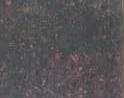
Steel where mill scale has started
to rust and flake
|
Brush off cleaning - SA-1 |
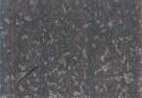
Commercial blast cleaning -
SA-2 |
|
Acceptable |
Best |
|
|
|
|
Near-white blast cleaning - SA-2-1/2 |
White metal blast cleaning - SA-3 |
|
| A SMOOTH surface is NOT the REQUIREMENT.
Select abrasives that can achieve the necessary standard
of minimum depth of PROFILE at 3 mils (75 microns). The
standards used by the industry are ISO 8501-1 Sa 2 1/2 =
VERY thorough BLAST Cleaning. (US Standard NEAR WHIT FINISH
SSPC SP10 - Swedish Standard Sa 2 1/2 SIS 05 5900) |
|
|
Metal surfaces that have been immersed for
any periods in SALT SOLUTION (i.e. Sea Water), should
be blasted to the required standard, left 24 hours to
allow ingrained SALTS to sweat to the surface and then
WASHED prior to a further BLAST to remove these. This
process may be needed to be REPEATED to ensure the REMOVAL
of ANY SALTS.
|
| Concrete |
| Blast clean or MECHANICALLY scarify the surface
to remove ALL loose materials and surface laitance. All old
coating / paint / tar etc should be removed. Finished surface
must be CLEAN & DRY. Wash old concrete down with detergent
to remove any remaining OIL / GREASE / DUST. Use CLEAN water
to wash away detergents &/or ACID from ETCHING the surface.
If NEW concrete application, allow 28 days to cure or until
the MOISTURE content is below 6%.
Other methods of preparation that can be used if BLAST
Cleaning is not available:
- Grinding
- Acid Etching (Hcl @ 4/1 with water - spread @ 1 liter
per m2 - RINSE & DRY)
- Hand Cleaning
NOTE: No STANDING water on application
PRIOR to coating. DAMPNESS on substrate can decrease the
physicals of the coating material. |
|
|
 |